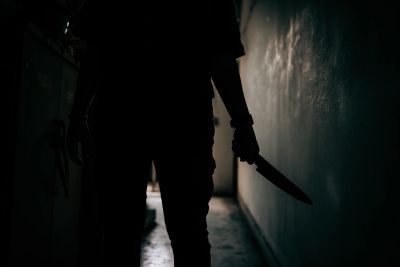
The Chief's Shadow: Written by Gery Leblond, 2026
A murder reveals corruption in the police force.
The rain had stopped twenty minutes before Detective Lena Morales arrived at the house on Weller Street.
Water dripped from the gutters, collecting in the cracks of the sidewalk. Patrol cars blocked both ends of the street, their lights washing the brick houses in alternating red and blue.
Morales ducked beneath the yellow crime-scene tape.
“Victim’s inside,” Officer Daniel Price told her. “Male. Forty-six. Name’s Thomas Reed. Neighbor called it in after hearing an argument.”
“Who found him?”
“Neighbor across the street. Mrs. Hanley. She saw the front door open and called 911.”
Morales nodded and entered the house.
The living room looked ordinary at first. A sofa. A television. Family photographs. A half-empty coffee mug on the table.
Then she saw the blood.
Reed lay on the kitchen floor.
He had been stabbed repeatedly.
The medical examiner, Dr. Evelyn Shaw, crouched beside the body.
“Multiple wounds,” Shaw said. “I'll know more after the autopsy, but this wasn't a single strike. Whoever did this was angry or determined.”
Morales studied the room without touching anything.
No signs of forced entry.
“Anything missing?”
“Not yet,” Shaw said.
Morales looked toward the back door.
It was unlocked.
“Neighbors hear anything besides the argument?”
“Mrs. Hanley heard a man shouting,” Price said. “Couldn't make out the words. Then she heard something hit the wall. After that, silence.”
Morales looked at Reed's body again.
“Let's find out who he was arguing with.”
Thomas Reed had worked as the city's purchasing director for eleven years.
His job was boring on paper: contracts, invoices, equipment purchases, vendor approvals.
But Morales discovered something interesting within three hours.
Reed had recently begun asking questions about police department contracts.
Specifically, a company called Sentinel Security Services.
Sentinel provided cameras, vehicle-tracking equipment, and surveillance systems to the city.
The company had received nearly eight million dollars in contracts over five years.
Morales sat across from Reed's supervisor.
“Why was he looking into Sentinel?”
The supervisor shifted uncomfortably.
“He thought some invoices didn't add up.”
“How?”
“He wouldn't tell me everything.”
“Did he name anyone?”
The supervisor hesitated.
“Chief Mallory.”
Morales stopped writing.
Police Chief Victor Mallory had been with the department for thirty-one years. He was respected publicly, politically connected, and known for running the department with an iron hand.
“You're saying Reed believed the chief was involved?”
“I’m saying Reed was afraid.”
The investigation widened.
Detectives collected Reed's phone, computer, and financial records.
His phone contained a message sent two nights before his murder.
If anything happens to me, look at Sentinel. Don't trust anyone at the department.
There was no recipient listed.
The message had been sent to an encrypted email account.
Morales brought the information to Chief Mallory.
He read the message silently.
Then he looked up.
“Detective, are you accusing me of something?”
“No.”
“Because it sounds like you are.”
“I'm investigating a homicide.”
Mallory leaned back.
“Then investigate the murderer.”
“I intend to.”
“Good.”
His voice hardened.
“Just remember who signs your paycheck.”
Two days later, another piece of evidence surfaced.
A traffic camera had captured a dark sedan near Reed's house shortly before the murder.
The license plate was partially visible.
Detectives traced it to a city-owned vehicle assigned to the police chief.
Mallory claimed someone else had been driving it.
“Who?”
“I don't remember.”
Morales stared at him.
“You don't remember who was driving your assigned vehicle the night a man was murdered?”
“I have officers who use it.”
“Names?”
Mallory gave them three.
All three had alibis.
Then detectives discovered something else.
The vehicle's GPS had been disabled for forty-seven minutes on the night of the murder.
Only one person had administrative access to disable it.
Chief Victor Mallory.
The chief's office was searched with a warrant.
Investigators found cash hidden inside a locked cabinet.
Thirty-eight thousand dollars.
They found copies of Sentinel contracts.
And inside a folder labeled Personnel, Morales found photographs of Thomas Reed.
Reed had been watched for months.
His movements.
His meetings.
His family.
His daily routine.
The chief wasn't merely connected to the case.
He had been monitoring the victim.
But prosecutors still needed something stronger.
A corrupt police chief could explain the motive.
It couldn't prove murder.
Then the forensic laboratory called.
DNA recovered beneath Reed's fingernails belonged to Victor Mallory.
Mallory was arrested before sunrise.
But he still denied killing Reed.
“I didn't touch him.”
Morales sat across from him in the interrogation room.
“Your DNA was under his fingernails.”
“You're wrong.”
“The vehicle was outside his house.”
“Someone borrowed it.”
“The GPS was disabled using your credentials.”
“Someone stole my password.”
“You monitored Reed.”
“No.”
“We found his photographs in your office.”
Mallory said nothing.
Morales placed another photograph on the table.
It showed Reed entering a bank.
Behind him was Mallory.
“Your DNA wasn't the only thing we found,” she said.
Mallory finally looked up.
“What else?”
“Security footage from the bank.”
His expression changed.
“The night before Reed died, you met him in the parking lot.”
Mallory stared at the photograph.
“He threatened to expose Sentinel,” Morales continued. “Sentinel was funneling money through shell companies. Some of that money went to you.”
Mallory's jaw tightened.
“You don't understand.”
“Then explain it.”
“I was protecting the department.”
“By stealing?”
“Everybody was taking money.”
“Not Reed.”
“No.”
Mallory looked down.
“He wouldn't stop.”
There was a long silence.
Morales knew what that meant.
“You killed him.”
Mallory closed his eyes.
“I went to his house to talk.”
“And?”
“He attacked me.”
“With a knife?”
“No.”
“Then why did you kill him?”
Mallory swallowed.
“Because he said he was going to the federal investigators.”
“And you couldn't let him.”
The chief said nothing.
That was enough.
Six months later, Victor Mallory pleaded guilty to murder, conspiracy, and multiple counts of public corruption.
Sentinel Security's executives were indicted.
Several city officials resigned.
The department underwent a federal review.
On the morning Mallory was sentenced, Morales stood outside the courthouse.
Reporters crowded around her.
One asked, “Detective, how does it feel to bring down your own chief?”
Morales looked toward the courthouse doors.
“He wasn't above the law.”
She paused.
“Neither is anyone else.”
Then she walked away.
Behind her, the courthouse doors opened.
Victor Mallory emerged in handcuffs.
For thirty-one years, he had worn the badge.
He had believed it gave him power.
In the end, it only gave investigators more evidence to follow.